Capacity discussions in food production line often focus on more speed . However, the main business risk is often more complexity, which directly influences production line optimization and long-term reliability.
Moreover, the U.S. Department of Agriculture estimates that 30 to 40% of the U.S. food supply is wasted. This shows how important it is to reduce losses throughout the supply chain, a core aim of food production optimization. These losses can also come from scrap, rework, and unstable production inside the plant.
Put simply, the question of “When Is One Production Line No Longer Enough?” arises when complexity, rather than speed, becomes the main constraint.
Furthermore, growing product ranges, formats, and production volumes increase the number of SKUs using the same equipment. This creates more operator interventions, heavier cleaning requirements, and tighter production schedules.
As a result, the impact on changeovers, throughput, and downtime can increase quickly. Therefore, at this stage, separating the production flow is no longer just an option. It can become a practical way to improve stability and profitability.
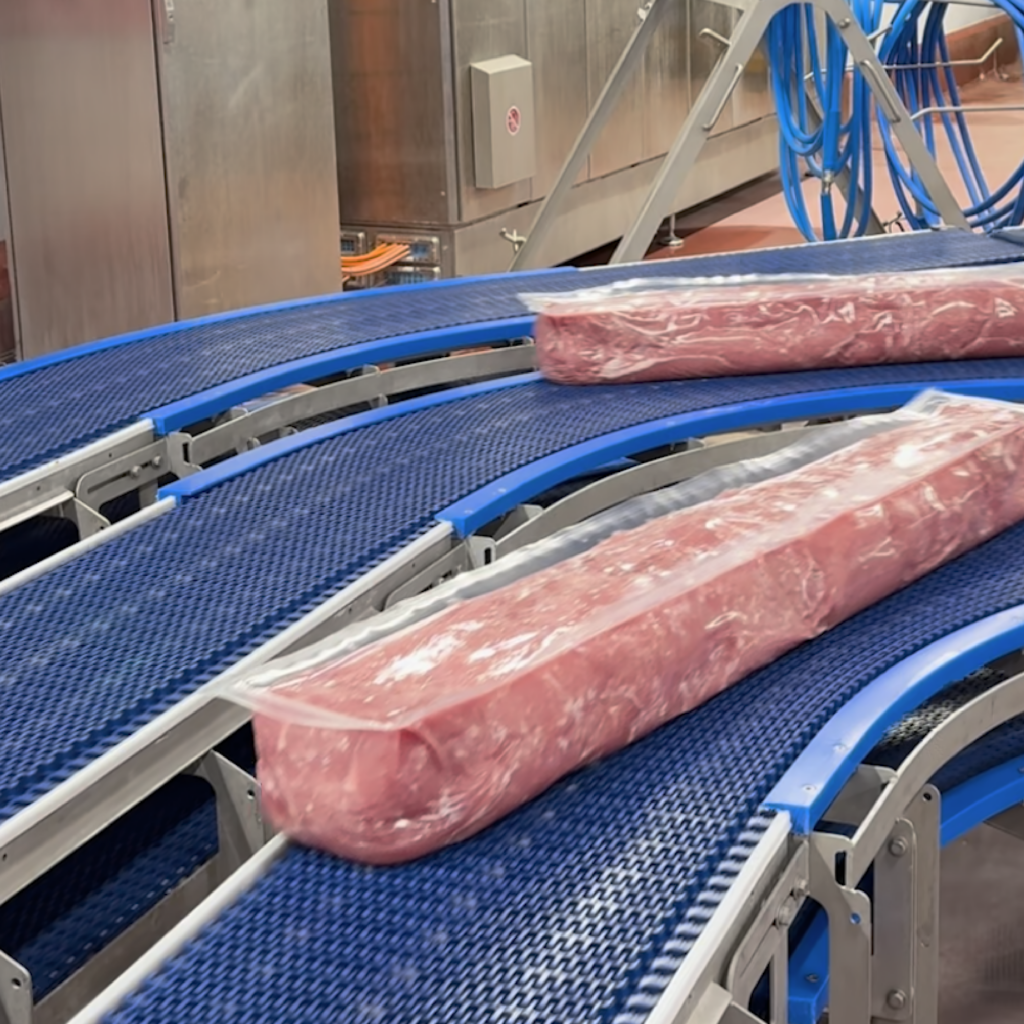
Most facilities first notice the problem through lost production time. This time cannot always be recovered by simply running the equipment faster.
For example, frequent product or format changeovers move the main constraint away from machine capacity. Set-up, checks, and restart time begin to limit production.
In addition, small batches can also disrupt high-volume production. They create repeated stops and additional yield losses during start-up and shutdown.
As product variety increases, the food production line becomes harder to balance. Large speed differences between products can create regular blocking upstream and product shortages downstream.
Similarly, cleaning operations can also stop the entire line. In some cases, sanitation time and allergen procedures become the main limit on available production hours.
Finally, if one equipment failure stops the whole line, the system does not have enough separation or buffering to protect production output.
The goal is not simply to add more equipment. It is to reduce losses caused by product variability and create a more reliable production layout, a core principle of production line optimization.
For instance, two fully independent production lines may be the best option. This can separate products, reduce operational risk, and simplify cleaning and scheduling. However, it also requires more space, utilities, and staff.
When a complete second line is not necessary, other solutions can provide many of the same benefits:
The right configuration depends on production volumes, product families, cleaning requirements, and available space. It should also support future demand and production growth as part of broader food production optimization.
Acemia designs and integrates complete food production lines around the product, the required throughput, the packaging format, and the constraints of the production site, with a strong focus on production line optimization:
The complete line is designed to ensure controlled product transfers, regular equipment feeding, and reliable synchronization between upstream and downstream machines.
Each solution also follows hygienic design principles. This includes stainless-steel construction, open and accessible structures, fewer product retention areas, easy belt access, and layouts that simplify cleaning, inspection, and maintenance.
One food production line is no longer enough when growing complexity reduces capacity faster than small improvements can recover it.
Frequent changeovers, cleaning stops, and speed differences between products can consume a large share of available production time. In this situation, the line’s theoretical output no longer reflects its real performance.
Separating the flow can improve both capacity and production stability. A complete second line is not always necessary. A new branch, a secondary line for small batches, or a dedicated route around the most disruptive steps may be enough to restore stable output.
The decision should be based on current production data and future product plans. This ensures that the selected architecture supports both today’s performance and tomorrow’s growth.