A sanitation program is often treated as “non-productive time”… until it fails. Deloitte has reported that the average direct cost of a product recall is about $10 million (Deloitte, Recall execution effectiveness, 2011). And for many food manufacturers, inadequate cleaning and sanitation is one of the fastest paths to that outcome.
Even when nothing goes wrong, cleaning remains one of the largest hidden drains on performance. In many facilities, it directly impacts food industry sanitation costs, capacity, labor efficiency, and operational flexibility.
Understanding “The true cost of industrial cleaning in food production lines” is not just a technical exercise. It’s a strategic one. In industrial cleaning food production and across the broader industrial cleaning food industry, sanitation is a controllable cost driver that influences OEE, changeover strategy, allergen risk, and ultimately profitability. Teams that partner with industrial cleaning services often confirm these dynamics firsthand.
The key shift? Top-performing plants don’t just improve cleaning procedures, they rethink how their equipment is designed.
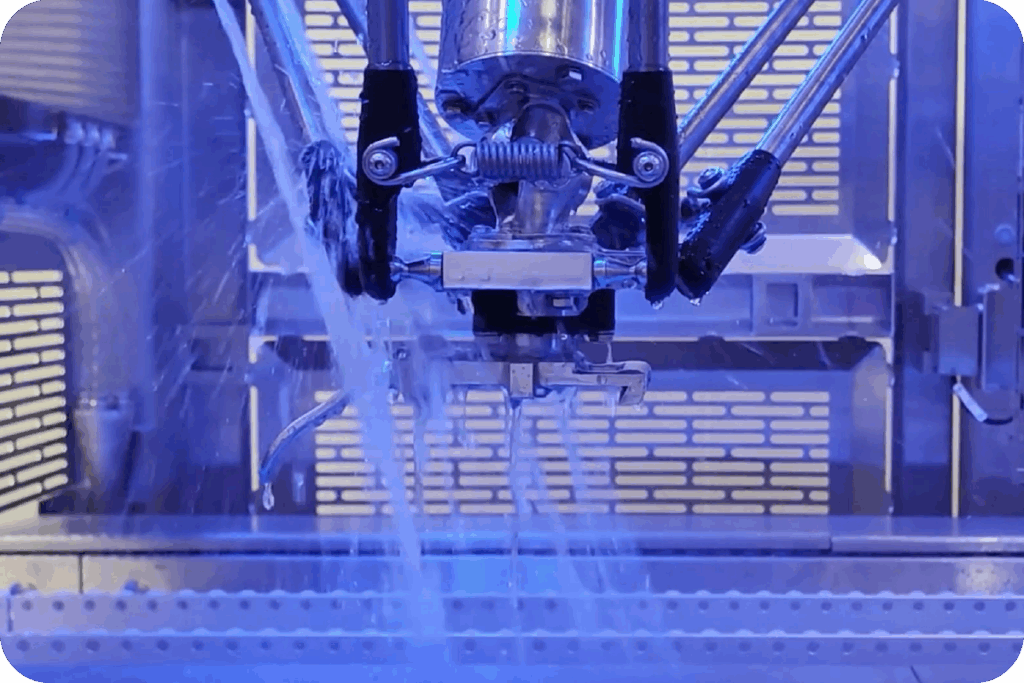
Production downtime is the most visible cost; but rarely the most understood.
A two-hour sanitation window doesn’t just remove two hours of output. It compresses the production schedule, increases pressure on upstream and downstream operations, and often leads to reduced line speeds before and after cleaning.
Every extra minute of cleaning is a minute you’re not producing.
On a typical line running two cleaning cycles per day, just 15 extra minutes per cycle can represent more than 120 hours of lost production per year. That’s weeks of capacity: gone.
Labor costs are equally underestimated. Cleaning is not just operator time. It involves supervision, quality checks, pre-operational inspections, documentation, and corrective actions when standards aren’t met. When disassembly is required, labor increases further through teardown, reassembly, and troubleshooting.
Water and chemical consumption add another layer. These costs are often tracked globally, not per line or per cleaning cycle, making them less visible. Yet in reality, each additional minute of cleaning multiplies:
When cleaning steps are extended due to difficult-to-remove residues, costs escalate quickly—without always being noticed.
Then come the indirect costs.
These effects rarely appear as “cleaning costs.” But they are.
Most plants don’t have a cleaning problem. They have a design problem.
Cleaning costs are underestimated because they are fragmented across departments. Downtime is tracked in production, utilities in facilities, and sanitation performance in quality metrics. No single KPI captures the full picture. Equipment design is often the root cause.
Hard-to-clean geometries create what are known as “soil traps”:
In food production cleaning, water retention is particularly costly. It increases drying time, raises microbial risk, and leads to unstable restarts.
When cleaning requires disassembly, the situation worsens. Each intervention increases time, labor, and the risk of reassembly errors. In high-mix environments, this turns sanitation into a recurring operational bottleneck.
A lack of standardized procedures also drives inefficiency. Without precise, equipment-specific cleaning protocols, teams compensate with longer cleaning times and excessive use of chemicals, just to be safe.
Finally, operator variability plays a major role. Two operators following the same instructions can achieve different results depending on equipment accessibility and visibility.
The result?
The most effective way to reduce cleaning costs is not to clean faster. It’s to design equipment that is easier to clean. This is the foundation of hygienic design food processing.
Instead of relying on complex procedures, hygienic design removes the root causes of cleaning inefficiencies. It ensures that surfaces are accessible, drainable, and free of retention zones.
In practical terms, this means:
This is particularly critical for conveyors used in food production cleaning.
Conveying systems often span large areas, connect multiple zones, and are exposed to both product contact and environmental contamination. Poorly designed conveyors become major sanitation bottlenecks.
By contrast, a hygienic conveyor design can significantly reduce:
And ultimately, it enables real food production downtime reduction.
This is where specialized expertise becomes a differentiator.
Acemia designs conveying systems specifically for food environments, with a strong focus on cleanability and performance. The objective is not to improve cleaning procedures, but to eliminate the constraints that make cleaning long, variable, and resource-intensive in the first place.
Instead of adapting cleaning to equipment, the equipment is designed to simplify cleaning.
Features such as optimized drainage, accessible components, and reduced retention zones allow teams to clean faster, more consistently, and with fewer resources while maintaining strict hygiene standards.
For many plants, the first step is simple: quantify sanitation as a cost per event. Once measured, the biggest opportunities for improvement quickly become visible, often in areas where cleaning is longest, most variable or most complex
Industrial cleaning is one of the most underestimated cost drivers in food production. It impacts everything: downtime, labor, utilities, product quality, and equipment lifespan. Yet its true cost often remains hidden behind fragmented metrics and outdated assumptions.
The most effective way to optimize cleaning is not only procedural, it is structural.
By applying hygienic design principles, especially in high-impact areas like conveying, manufacturers can reduce cleaning time, improve consistency, and lower operational costs without compromising food safety.
In a context where capacity is limited and flexibility is critical, cleaning becomes more than a constraint. It becomes a lever.
Because in the end, the real question is simple: are you managing your cleaning… or is your cleaning managing your production?